Monday, February 14, 2011

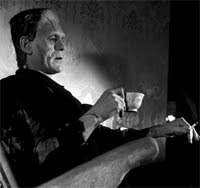
CFP: Haunted Men: Masculinity in the Ghost Stories of the Victorian and Edwardian Eras (4/29; 9/5/2011)

Haunted Men: Masculinity in the Ghost Stories of the Victorian and Edwardian Eras
One-Day Symposium, September 5, 2011

Keynote Speaker: Professor William Hughes, Bath Spa University

The ghost story is often cited in contemporary commentary as a female genre. It is however a genre which follows the growing agitation for women’s rights throughout the period: the rise of the New Woman, the suffragette movement, and numerous political and legal changes. Diana Wallace argues that: "The ghost story as a form has allowed women writers special kinds of freedom, not merely to include the fantastic and supernatural, but also to offer critiques of male power and sexuality which are often more radical than those in more realistic genres"(Gothic Studies 6.1 May 2004). This symposium will examine what happens to representations of men and masculinity in the ghost stories produced by both men and women in the face of growing criticism and change. Jennifer Uglow in the introduction to the Virago Book of Ghost Stories posits the idea that the men who see ghosts in these stories are pushed "into conventional female roles: timid, nervous, helpless" (xvii). However, while sometimes ghosts and those men who see them are queered, manliness remains evident in some stories and in others muscular Christianity comes into play. Elsewhere rationality as well as religion is tested to its limits.

We invite 250-500 word proposals for 20 minute papers to be submitted by April 29, 2011 to ruth.heholt@falmouth.ac.uk. The remit is wide, although there are some suggestions for topics/areas of discussion below:
  • Haunted patriarchs
  • Ghosts in the closet
  • Manly/effeminate ghosts
  • Ghosts in the domestic sphere
  • Sporting ghosts (hunting, shooting, fishing etc.)
  • Ghost-hunting
  • Ghosts and authorship/readership
  • Haunting and performance
  • Haunting and technology

Wednesday, February 09, 2011

CFP: Literature and Mathematics in the Long Nineteenth Century (2/21, 5/16-18/2011)


Literature and Mathematics in the Long Nineteenth Century
University of Glasgow, Scotland
16-18 May 2011

Plenary speakers will be Professor Marilyn Gaull (The Editorial Institute, Boston University), Professor Nigel Leask (University of Glasgow), and Professor Daniel Brown (University of Western Australia).

How did nineteenth-century literary writers and readers interact with mathematics, both advanced and basic? How were mathematical ideas transformed into narrative or poetry, satirized, domesticated, played with, and adapted for religious and political use? What would be the consequences for nineteenth-century studies of better knowledge and understanding of the period’s mathematical culture?

A few programme slots remain open. Proposals are very welcome for 20-minute papers on any aspect of the interactions of literature and mathematics in Romantic, Victorian, or Edwardian culture. Please send an abstract (up to 400 words) to alice.jenkins@glasgow.ac.uk by 21 February, or please contact Alice Jenkins at this address if you have any queries about the conference.


Monday, February 07, 2011

CFP: PAMLA Special Session "Materialisms in Victorian Literature and Culture" (3/17/2011; 11/10-11/2011)

Special Session
Pacific Ancient and Modern Language Association (PAMLA)
Scripps College, Claremont, CA 91711
November 10-11, 2011

Panel entitled "Materialisms in Victorian Literature and Culture"

This special session is devoted to assessing the presence and significance of material objects in Victorian literature and culture. Why are these objects placed in narratives? What significance do they carry for characters, reading audiences, authors. How do they help to tell a story?

Papers on literary theory on this approach to Victorian literature, or papers that apply this type of criticism to texts are all welcome!

Please send abstracts to Jean Arnold (jparnold@csusb.edu) by March 17.

PAMLA 2011 Conference:
http://www.pamla.org/2011/

Sunday, February 06, 2011

CFP Last Call: Travel in the Nineteenth Century: Narratives, Histories and Collections (2/15, 7/14-7/15/2011)

"Travel in the Nineteenth Century: Narratives, Histories and Collections"

14-15 July 2011

Last Call for Papers:

In the nineteenth century, railways made distant locations ever more accessible, the Grand Tour became more and more a pastime of the middle classes, and British imperial expansion brought exotic locales and non-Western cultures ever closer to home. New ways of thinking about and communicating experiences of travel and of interactions with other cultures held a significant influence in various areas of nineteenth-century culture. This period saw an enormous expansion in museums and popular exhibition culture, technological innovations, such as photography and film, as well as the vast growth of a popular press that served to deliver these experiences, images, and objects to an increasingly literate public. This public in turn seemed to possess an insatiable appetite for travel narratives, shows, and exhibitions, both fictional and factual.

This interdisciplinary conference seeks to explore the divergent and complex ways in which travel was understood and communicated in the nineteenth century. Contributors are invited to investigate the depiction and representation of travel in as wide a variety of media and for as wide a variety of audiences as possible. We seek submissions from historians, literary scholars, art historians, anthropologists, and material culture scholars, which illuminate the narratives—popular, academic, private or official—that surrounded travel in the period.

Plenary speakers will be James Buzard (Massachusetts Institute of Technology), Geoff Quilley (Sussex University), and Nicholas Thomas (Cambridge University).

We invite papers on themes such as:

  • The construction of ideas of the real and the virtual or authenticity and distance through travel narratives
  • Different venues for narrating travel, including the domestic, and the way such venues affected the consumption of travel narratives
  • Forms of travelling individuals, such as the missionary, the explorer, the tourist, the connoisseur, or the scientist, and how they were constructed by texts, images, and objects
  • Different audiences for travel narratives – in literature, exhibitions, private patronage of artists, or in museums and private collections
  • How different narratives framed and constructed the moment of encounter with the cultural other in travel
  • The role of technology in enabling new narratives of travel and how narratives of travel described technology
  • Travelling in time as well as travelling in space
We also invite session proposals that map onto the themes listed above. Session proposals should include a brief outline of the session (300 words), as well as three abstracts (300 words each) for the proposed session.

Please send abstracts of no more than 300 words to Kate Hill (khill@lincoln.ac.uk), Laurie Garrison (lgarrison@lincoln.ac.uk), or Claudia Capancioni (claudia.capancioni@bishopg.ac.uk). The closing date for proposals is February 15, 2011.


Friday, February 04, 2011

CFP: Journal Article on Influence of Eastern Philosophy for Special Issue


Dr. Kate Hext is editing a special issue on Literature and Philosophy in Victorian Britain for a leading journal. Now, in the final stages of the commissioning process, she is looking for an article on the influence of Eastern philosophy on Victorian literature. This could take one of several forms:

  • A survey approach - general discussion of one aspect of interactions between philosophical discourses and literary works spanning several authors
  • A concentrated discussion of a particular literary figure and the influence of a philosopher/philosophical work on his her work
  • A discussion of the influence of a philosopher on several literary figures
The editor is open to suggestions, as well. For more information or to submit a proposal, please email Dr. Hext, University of Exeter, at k.hext@ex.ac.uk ASAP.

CFP: MLA 2012: Three Special Sessions (3/2011; 1/5-8/2012)


2012 MLA CFPs
Three Special Sessions of Interest to Victorianists:

The Brontë Sisters in Other Wor(l)ds

All aspects of The Brontë Sisters as transcreated in languages other than English and/or as received in different sociocultural contexts. Send your 300-word abstract and short vitae by 1 March 2011 to Shouhua Qi (qis@wcsu.edu).


Literacy and the Victorian Gothic

Scenes of acquired literacy and literary indoctrination abound in nineteenth-century Gothic plots. How does literacy relate to the Gothic conventions of autodidacticism, self-transformation, transgression, and otherworldly possession? Send abstracts by 11 March 2011 to Bonita Rhoads (rhoads@phil.muni.cz).


Michael Field and the Arts

This panel analyzes the influence music, theatre, and art had on the construction of Michael Field’s dramas, verse, and diaries. Send a 300-word abstract and one-page CV by 5 March 2011 to Donna S. Parsons (donna-parsons@uiowa.edu).


The next MLA conference will be held in Seattle, Washington, January 5-8, 2012.

Monday, January 31, 2011

CFP: MLA Special Session on George Meredith's Poetry (3/10/2011, 1/5-8/2012)

Special Session on George Meredith’s Poetry
MLA 2012 Conference
5-8 January 2012
Seattle, WA

2012 marks the sesquicentennial of the publication of Meredith’s Modern Love and Poems of the English Roadside, with Poems and Ballads. Paper proposals related to any of the poems from Modern Love, or Meredith's verse more broadly, are welcome. Topics may include, but are not limited to: Meredith and Victorian theories of the senses, Meredith's mannerism, class in Meredith's verse, fiction/verse intersections, and Meredith and empiricist aesthetics. Please send abstracts of 250-300 words and a brief CV by March 10th to Rebecca Mitchell (rnmitchell@gmail.com).

Special sessions are subject to approval by the MLA; all panelists must be members of the MLA.

CFP: VPFA Conference: "Sex, Courtship, and Marriage in Victorian Popular Culture" (3/31; 7/18-19/2011)

Victorian Popular Fiction Association
3rd Annual Conference
18th & 19th July 2011
Institute for English Studies
University of London

Theme: Sex, Courtship, and Marriage in Victorian Popular Culture

Keynote speakers: Andrew King (Canterbury Christ Church University) and Jennifer Phegley (University of Missouri-Kansas City)

After our very successful conferences of 2009 and 2010 the Victorian Popular Fiction Association announces its third annual conference to be held 18th – 19th July 2011.

The themes we would like to develop are ideas of sex, courtship, and marriage, and the ways in which they are explored and represented in Victorian popular culture. This theme enables us to develop our interdisciplinary interests in nineteenth-century culture, and our understanding of the many and varied attitudes towards relationships throughout the Victorian period.

We are pleased to announce that our keynote speakers will be Jennifer Phegley and Andrew King, both of whom will be addressing aspects of the conference theme.

Papers relevant to the conference theme may be drawn from any aspect of Victorian popular culture and may address literal or metaphorical representations of the theme.

We remain committed to promoting research in any aspect of Victorian popular fiction, and the revival of interest in understudied male and female popular writers from this period will again be pivotal to this conference, as we look to build on the foundations we established at our conferences in 2009 and 2010. We invite proposals for 20-minute research papers on any aspect of the above theme. Topics might include, but are not restricted to:

• Sex and marriage in the periodical press
• The circulating libraries and their attitude to sex and marriage in Victorian fiction
• Sex and marriage on the Victorian stage
• Social codes governing courtship
• Courtship protocol and etiquette
• Physical relationships and intimacy
• Sex, marriage, and emigration
• Taboos related to sex, courtship, or marriage
• Sex, marriage, and death
• Medical attitudes towards sex and marriage
• Unconventional or transgressive relationships
• Marital harmony and the professional man or woman
• Representations of divorce, separation or the legal position of married women in popular culture.

Postgraduate students are particularly welcome.

Please send abstracts of no more than 200 words to either Jane Jordan (j.jordan@kingston.ac.uk) or Greta Depledge (depledgeg@aol.com) by Thursday 31st March 2011.

For further information about the Victorian Popular Fiction Association, see: http://fass.kingston.ac.uk/research/victorian/


Saturday, January 29, 2011

CFP: Work and Leisure: 23rd Annual RSVP Conference (2/1, 7/22 - 7/23/2011)

Research Society for Victorian Periodicals
43rd Annual Conference
Canterbury Christ Church University, UK
22 – 23 July 2011

Much of the Victorian Press was built on an interdependency of work and leisure. Texts designed for consumption in leisure hours were created by armies of workers: authors, illustrators and editors, of course, but also printers' devils, water-colourists, photographers, ad agents, newsvendors, street sellers, and a host of others. Who exactly were these labourers and how were they organised?

Then, what was the "leisure" that they promoted and how different was it from work? Reading the press is obviously an insufficient answer. Reading could be work for teachers, reviewers or those trying to entertain children or colleagues. To what extent, indeed, was leisure a ruse? How far did the Victorian press inscribe women's domestic labour as a form of leisure, or male work as pleasurable? More generally, how did the press fit into the wider context of the entertainment industry: the theatre, travel, music, exhibitions, sport and shopping?

Not all of the press was devoted to leisure and its limits. What of that enormous sector that unashamedly named their focus as work-related: the trade and professional press, newspaper pages devoted to the stock market and commodity prices, articles worrying over women in the workplace, over the masculinity of the civil servant, or over the demands of labourers on strike?

Finally, what of the "cultural work" of the Victorian press? What was the function of the press in and on society? How might that cultural work relate to the pleasures of leisure?
Suggested themes include but are not limited to:

  • Technologies and economies of production, distribution and consumption
  • The cultural work of the Victorian press
  • Trade and professional publications
  • The nature and locations of labour and leisure as they pertain to the press
  • The culture industries in the press, including travel, theatre, concerts, exhibitions, sport
  • Holiday Supplements

As always, the Research Society for Victorian Periodicals invites proposals for papers that address any aspect of nineteenth-century British magazines or newspapers, although those dealing with the conference theme are particularly welcome.

Submissions: Please e-mail two-page (maximum) proposals for individual presentations or panels of three to Dr Clare Horrocks (C.L.Horrocks@ljmu.ac.uk) and Dr Andrew King (andrew.king@canterbury.ac.uk). Please include a one-page C.V. with relevant publications, teaching, and/or coursework. Final papers should take 15 minutes (20 minutes maximum) to present. The deadline for submissions is February 1st 2011.

As well as favourable rates for postgraduate students, there is also the opportunity to apply for FIVE postgraduate prizes, provided with the support of the British Association for Victorian Studies and Ashgate. Full details are available under the tab "Postgraduate Bursaries".

Keynote Speaker: We are also pleased to announce that the Michael Wolff Keynote Speaker this year will be: Dr John Drew (University of Buckingham), director of the pioneering digitisation project "Dickens Journals Online."

Conference website: http://www.canterbury.ac.uk/arts-humanities/Media/victorian-periodicals-conference/home.aspx

RSVP website: http://www.rs4vp.org/index.html

Thursday, January 27, 2011

CFP: Graduate Symposium - Unexpected Agents (4/1; 6/24/2011)

Unexpected Agents: Considering Agency and Subjectivity Beyond the Boundaries of the Human (1800 — the Present)

One-day postgraduate symposium June 24th at the University of Birmingham

Keynote Speaker: Sarah Kember (Goldsmiths, University of London)

"Anything that does modify a state of affairs by making a difference is an actor - or, if it has no figuration yet, an actant"

(Bruno Latour, Reassembling the Social, 2005)

Whilst questions of human subjectivity and/or identity remain a persistent focus in literary and cultural studies, this one-day postgraduate symposium aims to consider how we might explore and account for agency from unexpected sources. Papers, plenaries and discussions at this symposium will place the non-human, the object, the supposedly "lifeless" at the centre, with a view to casting new light on and rethinking definitions of human agency and identity from an unconventional, askance perspective.

Bruno Latour and the Actor Network Theory (ANT) to which his work is seminal have interrogated the ways in which our reified notion of ‘the social’ has obfuscated the role and potential agency of apparently inanimate objects. When we consider "the social," Latour argues, emphasis overwhelmingly falls upon the agency of intentional human actors. That objects too might be considered as actors or agents has not been granted due attention, since from "the very definition of actors and agencies most often chosen, if action is limited a priori to what 'intentional,' 'meaningful' humans do, it is hard to see how a hammer, a basket, a door closer […] could act"(71). In other words, because the ways in which an object might be considered to "act" appears so incommensurate with the apparently purposeful, intentional and highly thought-out actions of human beings, the idea that objects might be considered as agents in their own right has suffered much neglect in sociological discourse. ANT is largely concerned with attacking this imbalance.

This symposium aims to acknowledge and yet exceed Latour’s and others’ focus upon the agency of objects to envision how authors, theorists and cultural producers have imagined and re-imagined the potential agencies of a wide range of entities, to which and to whom access to power is conventionally seen as foreclosed. It will explore how this over-looked but fascinating trope persists across genres and historical boundaries, from Romanticism to Science Fiction, and from 1800 to the present day.

Possible conference paper topics may include (but are not limited to) a focus on the following kinds of "unexpected agent":

  • Objects (art objects, artefacts, antiques)
  • Spaces/ Landscapes
  • Ghosts and the deceased
  • Mediums and the hypnotised
  • Babies/ Infants
  • Animals
  • Technology (radio, machines, scientific apparatus)
  • Nature
  • Words themselves

The organisers invite 200 word proposals for 20 minute papers, by Friday 1 April 2011.

Please send your proposals to: Paul Horn (PMH487@bham.ac.uk), Sarah Parker (SLP883@bham.ac.uk), and Holly Prescott (HXP823@bham.ac.uk).

Information about our plenary speaker:

Dr Sarah Kember (Goldsmiths, University of London)

Sarah Kember’s research focuses on digital media, questions of mediation and feminist science and technology studies. She is currently investigating the possibilities of life after new media (studies), and has engaged in debates on artificial life and other aspects of the convergence between biology and computer science. She also works on imaging technologies and the relationship between photography and the digital and is developing an innovative approach to the question of remediation and the ‘fusion’ of science and literary fiction.

Conference website: http://www.english.bham.ac.uk/unexpected/


CFP: Second Issue of UpStage: A Journal of Turn-of-the-Century Theatre (2/15/2011)


UpStage: A Journal of Turn-of-the-Century Theatre, a peer-reviewed online publication dedicated to research in turn-of-the-century dramatic literature, theatre, and theatrical culture, seeks submissions for its second issue scheduled for the spring or summer of 2011. This is a development of the pages published under this name as part of THE OSCHOLARS, and will henceforth be an independently edited journal in the oscholars group published at www.oscholars.com, as part of our expanding coverage of the different cultural manifestations of the fin de siècle.

Topics may include, but are not limited to, the work of Shaw, Schnitzler, Ibsen, Chekhov, Strindberg, von Hofmannsthal, and their contemporaries in Western and Eastern Europe and beyond.

UpStage welcomes a variety of theoretical and critical methodologies.

We are interested in receiving:
  • Scholarly articles of approximately 3,000 words
  • Book-reviews of approximately 500 words
  • Reports on work in progress (book manuscripts, master’s theses, and doctoral dissertations) (approximately 500-1000 words)
  • Reviews of contemporary productions of turn-of-the-century plays (or plays about the turn of the nineteenth century) and announcements of future productions (approximately 500 words)
The publication is international in scope. Although we will publish in English initially, we hope to include publications in other languages in the future.

By February 15, 2011, please e-mail your submissions, as MS Word attachments only, to both Dr. Helena Gurfinkel, Department of English Language and Literature, Southern Illinois University Edwardsville, Edwardsville, IL, USA at hgurfin@siue.edu and Dr. Michelle C. Paull, Drama Programme, St. Mary's University College, Strawberry Hill, Twickenham, TW1, 4SX, England, at paullm@smuc.ac.uk.

Submissions should conform to the latest version of the MLA style. In order to undergo masked peer-review, scholarly articles must be submitted in the following way: the author’s contact information and brief bio should appear in the body of the e-mail, while the Word attachment should contain no identifying information.

CFP: "Enduring Grub Street" - Special Session of the Defoe Society Conference (1/31, 7/14-16/2011)

The Culture of Grub Street:
The Second Biennial Meeting of the Defoe Society

University of Worcester, UK

14-16 July 2011


CFP: Special Session "Enduring Grub Street"

I would like to call list members' attention to a panel, "Enduring Grub Street," which I will chair at this year's conference of the Defoe Society, to be held at the University of Worcester, July 14-16, 2011. You can find all the relevant conference information at http://www.worcester.ac.uk/departments/14693.html

The panel seeks submissions that engage with the following topics: 1) the privations and obstacles that writers, readers, and others who were employed in the printing and bookselling business faced when dealing with Grub Street; and 2) the legacy of Grub Street as a metaphor for those privations. It is the purpose of this panel to bring together studies of eighteenth-century Grub Street as a challenging environment for aspiring authors and seasoned entrepreneurs with inquiries into the conceptual uses that later periods made of Grub Street. What were the market and working conditions associated with eighteenth-century Grub Street? How did readers approach the products of Grub Street, and how did they negotiate or contribute to the conceptualization of "Grub Street" as a synonym for hack writing and cheap print? And what was at stake when later generations recycled the "Grub Street" label to describe contemporary writers or sections of the print industry? How and why did Grub Street endure as a concept beyond the specific economic conditions of an eighteenth-century business location? Papers that consider both strands of our enquiry are particularly welcome, as are papers that take a broadly intermedial view of Grub Street's print productions.

Please email a paper proposal of no more than 200 words to Dr Andreas Mueller at a.mueller@worc.ac.uk, stating the title of this panel; deadline for submissions is January 31, 2011. I would be particularly interested in submissions by Victorianists, Edwardianists, or just plain Long-Nineteenth-Centuryists (not that they are plain, mind you) - ideally I would have a good balance of papers across the C18 and C19 for the conference.

All best,
Sören Hammerschmidt
--
Dr. Sören C. Hammerschmidt
Postdoctoral Research Fellow/Postdoctoraal onderzoeker
Research on Authorship as Performance (www.rap.ugent.be)
English Studies, Literature Department/Vakgroep Letteren
Ghent University/Universiteit Gent


Wednesday, January 26, 2011

CFP: Insanity and the Lunatic Asylum in the Nineteenth Century (3/25, 5/13/2011)

Insanity and the Lunatic Asylum in the Nineteenth Century
A one-day conference on Friday 13th May 2011
Birmingham, UK

"The place where optimism flourishes most is the lunatic asylum" - Havelock Ellis

This interdisciplinary conference will address a range of issues concerning the perception of insanity and madness in the nineteenth century, its manifestations and treatments, and the patients themselves. The conference will take place on Friday 13th May, 2011, in the chapel of the Birmingham Lunatic Asylum, an impressive building used to restrain and treat patients from 1862 until 1964.

We invite papers on a range of subjects related to this theme. Please submit an abstract of 350 words to serena.trowbridge@bcu.ac.uk by 25th March, 2011. Subjects covered might include:

  • The life of patients in lunatic asylums
  • The literary treatment of madness and lunatic asylums
  • Early psychiatry in the asylum
  • The architecture and physical space of the lunatic asylum
  • Artists and writers and insanity
  • Poetry and madness
  • Insanity and/or the asylum in the nineteenth-century novel

CFP: Pre-Raphaelite Audiences: Artists, Critics, Readers - William Morris Society Session at the MLA Convention (3/15/2011, 1/5-8/2012)

Call for Papers MLA 2012:
Pre-Raphaelite Audiences: Artists, Critics, Readers

5-8 January 2012
Seattle, WA

Papers are sought for a proposed session at the Modern Language Association 2012 annual convention on "Pre-Raphaelite Audiences: Artists, Critics, Readers," co-sponsored by the William Morris Society in the United States and SHARP (Society for the History of Authorship, Readers and Publishing). Abstracts or proposals (250 words maximum) should be sent by 15 March to Florence Boos atflorence-boos@uiowa.edu and Gregory Barnhisel atbarnhiselg@duq.edu.

For more information about the William Morris Society visit www.morrissociety.org.

Tuesday, January 25, 2011

CFP: The Monster Inside Us, The Monsters Around Us: Monstrosity and Humanity (6/1, 11/18-20/2011)

The Monster Inside Us, The Monsters Around Us: Monstrosity and Humanity

A three-day conference, 18, 19, 20 November 2011

De Montfort University, Leicester, UK


Keynote Speakers:

  • David Punter, University of Bristol
  • Andy Mousley, De Montfort University, Leicester

The Oxford English Dictionary locates the origin of the word "monster" in the 12th-century Old French word mostre, meaning a prodigy or marvel, originally used to denote a mythical being, half-human, half-animal. From the 13th century the term was used derogatorily to indicate something other than "normality": something large, gross, malformed or abnormal. The monstrous now created fear and loathing rather than awe, and was not limited to physicality, but included difference through race, culture, society, ideology, psychology, and many other Others.

The fear raised by Otherness is not produced through the presentation of something entirely alien, but by the recognition of ourselves within the Other. In his Introduction to Cogito and the Unconscious Slavoj Žižek argues that the Cartesian Subject has at its heart the monster which emerges when deprived of the "wealth of self-experience." At the heart of the human is the monster; at the heart of the monster is the human. The instability of the individual subject and the ease by which the ever-changing border between "human" and "monster" is transgressed has long been debated in literature; Frankenstein makes a monster by trying to perfect the human, while both nineteenth-century Flora Bannerman, in Varney the Vampire, and twenty-first-century Sookie Stackhouse recognise the human origins of the vampire.

This conference seeks to understand the relationship between the human and the monstrous across the centuries and across disciplines. In what ways and to what ends have the human and the monster been defined and polarized? How has the monster been subdued, and with what success? How do definitions and separations of the human and the monstrous change and through what pressures and motivations? How does the emerging field of posthumanism enable us to conceptualize the monstrous in relation to the human and humanism?

Proposals are invited for 20-minute papers which may address, but are not limited to:

  • Monstrosity in the humanities
  • The monster and criminality
  • Psychology and the monster
  • Monstrosity and the internet
  • The human and the monster in the post-national world
  • Monstrosity and miscegenation
  • Liminality and transgression
  • Theories of monstrosity and/or the human
  • Historical monsters
  • Humanism, the post-human, and monstrosity

Please send abstracts of 300 words to Dr Deborah Mutch, Department of English, Clephan Building, De Montfort University, Leicester, LE1 9BH, email: dmutch@dmu.ac.uk

Conference Fee: £30 / £15 post-graduate/unwaged including lunch and refreshments

Deadline for abstracts: 1 June 2011

Click here for the conference website.


CFP: Fin-de-Siècle Pedagogies - Special Session of the MLA Convention (3/10/2011, 1/5-8/2012)


Fin-de-Siècle Pedagogies
Special Session: the MLA Convention
Seattle, WA
January 5-8, 2012

Topics may include, but are not limited to:

  • Disseminating sexual “knowledge”
  • Lecture tours
  • Public health education
  • Schools & universities
  • Homoeroticism & pedagogy
  • Education & the New Woman
  • Teaching the fin de siècle today

Not limited to Anglophone literature and culture. Send an abstract of 300 words and C.V. by March 10, 2011 to Helena Gurfinkel (hgurfin@siue.edu ). This special session is subject to approval by the MLA. Panelists must be MLA members by 7 April 2011.

Monday, January 24, 2011

CFP: "Performing Philanthropy" - Panel Proposal for NAVSA 2011 (2/15, 11/3-6/2011)

Call for Papers
NAVSA 2011

Panel Proposal: Performing Philanthropy

When Charles Dickens first satisfied his longing to be on the stage, he made sure to appear in benefit performances. As long as he was raising funds for charity, even the stage was respectable. When the Anti-corn Law League wanted to fill its waning coffers and boost its public image, it opted to stage a fund-raising bazaar. The event filled London's Covent Garden Theater to capacity for over two weeks during the 1845 London season, the fair-goers flocking to see the entire theater transformed to look like a Gothic hall, filled with every variety of manufactured goods and ladies' work for sale. Philanthropic work invited play and performance, a fact about which the Victorians were quite frank. Benefit performances were often listed in the entertainment sections of newspapers. Organizers solicited patrons who would attract a large crowd and lecturers who could elicit tears and coins for the most unfortunate.

Given the variety of fund-raising methods employed, the vast number of causes espoused, and the plethora of ideologies and motivations claimed, Victorian philanthropy defies simple classifications. With the rise of institutional giving, philanthropy became a primary means of mediating class relations and thus a widespread social practice and a pervasive literary theme. How did novels and related forms of social investigation-slum surveys, works of political economy, and moral commentaries-figure the performative, ritualistic aspects of philanthropy? What aspects of play were involved in these seemingly staunch and serious rituals?

We propose a panel on Performing Philanthropy for the 2011 NAVSA conference. We invite paper proposals of 500 words dealing with issues pertaining to the play and performance involved in Victorian philanthropy and charity work. Please submit proposals, along with one-page c.v.'s, by February 15th to Frank Christianson (frank_christianson@byu.edu) or Leslee Thorne-Murphy (lesleetm@byu.edu).

Possible topics:
  • Performing poverty and/or benevolence
  • Philanthropy as social classification: modes of discrimination, the "deserving poor," detecting pauperism.
  • Social surveys as ethnographic tourism-slumming, the philanthropic gaze, the aesthetics of street life
  • The rhetoric of altruism: public morality vs. private charity
  • Performing gender through philanthropy
  • Philanthropic imperialism: charity work and colonial allegiance
  • Negotiating class identity through philanthropic work
  • Philanthropy as social ritual
  • Fictional philanthropy as entertainment/Authorship as philanthropy
  • Mass mediated philanthropy and popular culture/visual culture/photography

CFP: "Digital Play and Deformance; or, Screwing Around with Victorian Literature" - Panel Proposal for NAVSA 2011 (2/21, 11/3-6/2011)

A panel proposal for NAVSA 2011, “Performance and Play”
Vanderbilt University, November 3-6, 2011
http://vanderbilt.edu/navsa

Digital Play and Deformance; or, Screwing Around with Victorian Literature

Is Victorian studies “ready to accept surfing and stumbling—screwing around, broadly understood—as a research methodology”? In “The Hermeneutics of Screwing Around,” Stephen Ramsay proposes a seriously playful attitude to the challenges and opportunities posed by super-abundant digitized resources, computing tools, and networked scholarly communication. Ramsay’s “screwmeneutical imperative” updates for the digital humanities what Jerome McGann and Lisa Samuels proposed in “Deformance and Interpretation,” moving modes of inquiry “beyond conceptual analysis into the kinds of knowledge involved in performative operations.” This panel invites theoretical and practical perspectives on performative, deformative, or “screwmeneutical” approaches to Victorian studies, particularly those involved with computing and digital media.

Submit proposals of no more than 500 words and a very brief statement of relevant experience (or a one-page CV) by February 21, 2011 to pfyfe@fsu.edu. Please note that, regardless of panel acceptance, all abstracts will be considered for the conference by the organizers.
--
Paul Fyfe
Assistant Professor
English, History of Text Technologies
Florida State University
http://hott.fsu.edu

CFP: 2011 North American Conference on British Studies (3/15, 11/18-20/2011)

North American Conference on British Studies

ANNUAL MEETING

DENVER, COLORADO

NOVEMBER 18-20, 2011

The NACBS and its Western affiliate, the Western Conference on British Studies, seek participation by scholars in all areas of British Studies for the 2011 meeting. We will convene in Denver, Colorado, from November 18-20. We solicit proposals for panels on Britain, the British Empire, and the British world. Our interests range from the medieval to the modern. We welcome participation by scholars across the humanities and social sciences.

We invite panel proposals addressing selected themes, methodology, and pedagogy, as well as roundtable discussions of topical and thematic interest, including conversations among authors of recent books and reflections on landmark scholarship. North American scholars, international scholars, and Ph.D. students are all encouraged to submit proposals for consideration. Strong preference will be given to complete panel or roundtable proposals that consider a common theme. Panels typically include three papers and a comment; roundtables customarily have four presentations. Individual paper proposals will also be considered in rare cases. We urge those with single paper submissions to search for additional panelists on lists such as H-Albion or at venues such as the NACBS Facebook page. Applicants may also write to the Program Chair for suggestions (nacbsprogram@gmail.com).

All scholars working in the field of British Studies are encouraged to apply for the 2011 conference, though we particularly welcome submissions from those who did not appear on the 2010 program. Panels that include both emerging and established scholars are especially encouraged, as are submissions with broad chronological focus and interdisciplinary breadth. We welcome the participation of junior scholars and Ph.D. candidates beyond the qualifying stage. To enable intellectual interchange, we ask applicants to compose panels that feature participation from a range of institutions. No participant will be permitted to take part in more than one session and no more than one proposal will be considered from each applicant.

Submissions will be taken at www.nacbs.org/conferences.html through March 15, 2011.

If you have questions about the submission process or suggestions for program development, please contact

Lara Kriegel

NACBS Program Chair

Associate Professor of History and English

Indiana University, Bloomington

nacbsprogram@gmail.com


Friday, January 21, 2011

CFP: Manipulation: Victorian Variations on Hands, Handling, and Underhanded Behaviour (1/28, 4/30/2011)


Victorian Studies Association of Ontario 44th Annual Conference
MANIPULATION: VICTORIAN VARIATIONS ON HANDS, HANDLING, AND UNDERHANDED BEHAVIOUR
30 April 2011
Glendon Campus, York University

We are seeking papers that explore Victorian variations on manipulation, hands, and handling. In what ways did manipulation resonate in the Victorian period? In what ways did hands resonate in the Victorian period? Papers may focus on any of the following topics on their own or in combination:

  • Literal hands (working, drawing, writing, growing things, playing music)
  • Tricks of the hand (magic, shadow theatre)
  • Handicrafts (arts and crafts, textiles, pottery)
  • The etiquette of the hand (handshakes, greetings, gloves, rings)
  • Hidden hands (masturbation, strangulation, prosthetics, "the dead hand")
  • Gendered hands (fighting, being brought up by hand)
  • Reading the hand (fortune telling, class, signing)
  • Manipulating hands ("by another's hand," "having a hand in," "bad hands")
  • Economics and the hand (industrialization and hands," work by hand, injuries to the hand)
  • Handwriting (forgery, deceit, shorthand); etc.
We welcome papers on any dimension of the hand, handling and/or manipulation in the Victorian period.

The VSAO (Victorian Studies Association of Ontario) will hold its 44th annual conference at the beautiful Glendon Campus of York University, Toronto on 30 April 2011. This one-day event includes a morning panel of three speakers, followed by lunch, the VSAO business meeting, and two plenary speakers in the afternoon. Plenary Speakers are James Eli Adams (Columbia University), "The Dead Hand: George Eliot and the Uses of Inheritance," and Lorraine Janzen Kooistra (Ryerson University), "The Dyer's Hand and What it Works in: Laurence Housman and the Book Arts."

In keeping with this year's theme, Manipulation: Victorian Variations on Hands, Handling, and Underhanded Behaviour, the VSAO executive invites abstracts for papers to be presented at our morning panel. Please send electronic copies of proposals (300-500 words) and a brief biographical statement to Barbara Leckie (barbara_leckie@carleton.ca) by 28 January 2011. Alternatively, hard copies can be sent by mail to Barbara Leckie / Department of English / Carleton University / 1125 Colonel By Drive / Ottawa, ON K1S 5B6.

Click here for more information.